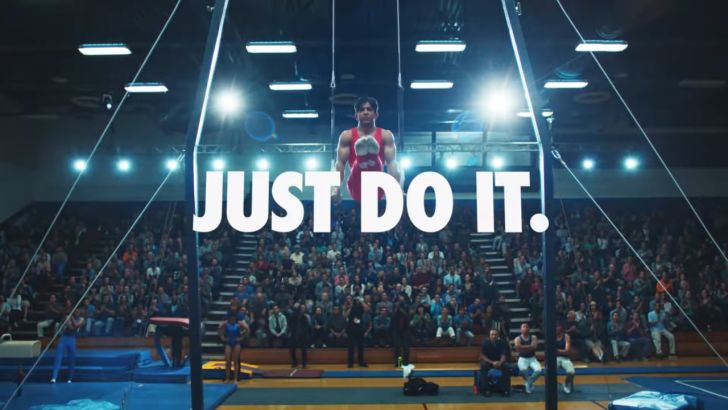
Welcome to another Method Breakdown, today featuring Ed Harrison & Matt Carroll. At the time of this interview, Ed and Matt are Freelance Creative Directors. As a creative and creative directors, they have made iconic work for brands like Nike and KFC.
Timestamps
00:00 Intro
01:19 Briefs Should Talk to Humans
04:50 Good Briefs Begin With What’s Real
05:38 Call the Bullshit
06:51 On The Strategist’s Job
08:38 Channel Your Inner Detective
10:39 No bullshit Filter
13:01 Ed’s Approach to Volume
14:37 Matt’s Approach to Volume
15:52 Do It For Yourself
19:51 The Complacency Trap
21:11 Matt’s Take on Craft
22:49 The Idea Is the North Star
23:40 Make Manifestos Sound Human
26:45 On Writing Nike “Possibilities”
29:08 When The Script Needs a Rhino
31:08 On Nike “Unlimited”
34:36 On Writing Modular Spots
36:03 On Writing Endings
37:30 Writing the Ending of Nike “Possibilities”
38:59 On Nike “Puppets”
43:18 On Writing Nike “Puppets”
49:36 Learning to Write Dialogue
55:26 How Much Does The Director Care?
58:57 Protect the Core Idea
59:41 Caring Versus Being Annoying
1:01:10 Ed’s Take on Presenting Work
1:13:18 Make the Deck Human
1:14:12 On Fisher Price “Everything Is a Toy”
1:17:50 Ed & Matt on Creative Direction
1:22:27 Help With Perspective
1:24:26 Look for the Right Energy
Why a Paywall?
Imagine you could hire a film crew to interview the world’s best creatives, distill how they tackle their work, and bring you the most useful takeaways. Stuff like: how to get unstuck, sell more ideas, sharpen your craft, manage clients, level up your CD game, and avoid critical mistakes. Hiring that crew would be awesome. And expensive. Unless you get a bunch of creatives to chip in $12/month and fund the venture together. That’s what’s happening here. METHOD® is 100% funded by members, and every dollar goes back into making more interviews. Join the community, support the vision, and unlock full access.
Ed and Matt Selected Work
See below a few standout pieces from their books:
Transcript
Below is an automatically generated transcript from the video. Minor mistakes can occasionally slip in.
Briefs Should Talk to Humans
ED: Sometimes you’ll get a brief and you can smell it. It’s like, this don’t smell right. This don’t smell like the real deal. This feels fake as a $3 bill. So then I gotta go ask questions. I gotta go sniff out what’s real. I gotta go talk to people. I gotta go talk to what used to be the account person. I gotta go talk to whoever’s got the real answers for me.
And that’s when I know what’s really going on. Sometimes the briefs get way too sanitized for their creatives. So they strip out all of the meat and try to simplify it, dumb it down so the creatives don’t get lost in the sauce. Fair enough.
You don’t wanna confuse the creatives, so they stay focused. But in the process, sometimes you lose what the clients are really looking for. And if you don’t know what the client really wants, and then you’re just off kind of coming up with your favorite creative thing to do, then you’re gonna hit a brick wall every time. No matter how much the CDs say, “I love this idea, this is great.”
“Let’s put some meat on these bones and show it to the client.” That all feels good until you get into that client meeting and they all look at you like, what the fuck is this? What is this?
I’ve had that happen a number of times where the CDs have been like, great, this is great. Oh yeah, they’re gonna love this. They don’t love it. They didn’t love it at all. In fact, they were quite upset. So I don’t know, I think it comes with some time and some experience where you just start to smell out something that doesn’t feel right. And I think it just becomes kind of a little more intuition, a little gut.
MATT: And more conversations. Definitely. I’ll do that with you, where we will make a tour around to the different departments and be like, what do you think’s going on with this? What is this? Let’s have some conversations. What do you think about this product or this idea or this strategy and just get some human responses from people?
Because often on the page, it’s not human. It’s just the data and some strategy set up. But once you start having conversations, even with the strategist who wrote the brief, just be like, no, let’s dig a little deeper. What do you think about this? Don’t tell the strategist.
ED: It’s like, it’s feast or famine, I think. Sorry to cut you off, but I’m really passionate about this. It’s feast or famine with strategists. You can get a one page brief, which I prefer, but there’s rarely enough information in there, or you can get a 20 page deck, where it’s everything but what you want. Everything but.
Anyway, sorry, yeah. How do you know when you’re ready to work? When you have some answers, when you know what you’re really doing. I’ve had briefs where it’s like, oh, this is clear as day. But those are rare. Those are rare.
It’s usually, like Matthew said, you get a brief, and then you need to go and hunt down the humanity in the brief. And whoever you need to go to for that, you do. In some circumstances, quiet is kept. You can talk to the client, if you know how to get to them, if you know where they live, where they get coffee, or where they shop.
Good Briefs Begin with What’s Real
ED: A good brief, I think one of the most important things is clarity, knowing exactly what’s expected of you. And honestly, some truth in humanity. I think a lot of briefs are missing, like truth, and humanity, and it does sometimes start to feel pretty analytical, especially nowadays when so many people are testing work, so many clients know exactly the numbers that they need to hit and achieve, and so that kind of bleeds into the brief.
And that’s okay, but trying to work to the analytics makes the creative stiff.
Call the Bullshit
ED: When I see a brief, I’m usually, I’m really hard on briefs. I’m really hard on briefs, because you can’t get going if you don’t have the foundation. If it’s not clear, and if it doesn’t help to jumpstart my thinking, because there’s something there that’s interesting to think about, then I don’t know, your foundation is just faulty.
MATT: I’ve never seen somebody argue with strategists or within you. Anytime a strategist is presenting us a brief, I’m usually just bracing myself for the conversation where Edward says, “This is bullshit, what is this? I disagree completely.” And it’s cool, because then it’ll sort of generate, I mean, again, I think we’re going for the humanity and trying to figure out what’s really going on, but I’m more the type who will just take it and go think about it, which is good to have you alongside me, because you’re like, “No, hold on. This is false.”
ED: Well, to be fair, I think everything’s bullshit and everything’s false.
On the Strategist’s Job
ED: I think that strategists, the best strategists are able to lay out an argument for what the client wants. And they need to be able to translate a very analytical, static need that the client has and lay out an argument for the creative teams about how you can tackle that in an interesting way.
They’re kind of like advertising lawyers in a sense, where they need to be really good at analyzing a lot of information and then be able to say it to them, and then be able to say it to a specific group of people in a way that they can absorb it and do something with it. And that’s a really hard job. I don’t envy any strategists, and I honestly think that strategists have to be brilliant. They do, they have to be brilliant. Like, they are kind of the engine of an agency, like especially a big one.
Because you couldn’t just turn a creative team loose with what a client wants, chaos, instantly. And that’s just what happens in a fast-paced environment. Like the strategists don’t get enough time. They don’t get enough information. They have to go dig, they have to go ask questions. Meanwhile, the creative teams are like, where’s the brief?
This thing needs to be done in a month? Okay, now it needs to be done in three weeks? Oh shit, now it needs to be done in two weeks. And the strategists are like, I’m trying. I’m trying here. I’m trying to pull something together for you. What they go through in the background is probably a lot more hellish than any creative team understands.
Channel Your Inner Detective
MATT: When I start working on an assignment, when I’m ready to go, I do a lot of research. Maybe this is not a creative thing to do, but I love learning about a client’s business and interviews they’ve done, things they’ve said, how the business is doing, what their competitors are doing, just to kind of try to understand the world.
It’s really, and also like what customers are saying, what people are saying in the YouTube comments. Like I’m fascinated by like the context of everything because then I started to form an opinion about the client or their business. And that opinion ends up being like a point of view that turns into a campaign. Yeah, I love, is that the process you’re talking about?
ED: That’s exactly your process. It’s fascinating.
MATT: Why is that fascinating?
ED: Because it’s opposite of what I do. And I’ve never once researched a client or their business. So I’ve never looked it up. Like, and it sounds like such a smart way to get into it.
And I’m always fascinated because, well, within the first hour, Matthew will have sent me 24 articles and TikTok links and he was like, oh yeah, the CEO just retired. And now there’s a new CEO. Like, we just started, how do you know this already? He’s like, here’s their address. They’re getting married next week. I’m like, you’re an insane person. He knows everything about the client in hours, in hours. He is an undercover strategist.
MATT: That is a weird way to start your first 24 hours on an assignment. That’s amazing.
I do like the way that it balances each other though. Cause then I can kind of feed you a little bit and you can be like, yeah, that’s not important. I had this strong reaction to this brief and this is how I feel. And I will say, that’s perfect because I found YouTube comments. You know, people on the YouTube comments feel the same way.
Develop a No Bullshit Filter
ED: When I first started on Nike, they were like, we’re coming out with the hyper dunk. People are gonna love it. It’s a new basketball shoe. It’s called the hyper dunk. And I swear, man, I almost got fired on my first day because I said, man, that’s an ugly shoe. That’s you ugly as hell.
And I’m from the inner city. I can guarantee you that nobody cares about this. And they were all looking at each other like, we might’ve hired the wrong guy. We might’ve fucked up here.
And it’s always like, it’s always how I take it. It’s always like, I don’t either, I think it’s awesome and true or I think you’re bullshitting people. And that’s the ad I’m gonna write. That, hey, guess what? You know how much you love this shoe? And then somebody on him is like, we don’t love that shoe. We ain’t never heard of that shoe. I don’t know what shoe we want. I wrote that ad for Nike. I really did. And it never got made. Good for them.
But I just felt like if you’re going to have like an honest, authentic conversation with people, be honest and authentic with them. Don’t try to like pull the wool over their eyes or like try to snow job people into believing something they don’t.
This power that we have, this industry that we’re in, it’s really powerful. We can sway public opinion about things in ways that people don’t even know that their opinion is being swayed just by the amount of money that people throw at our ideas. I’d rather not be slimy about it if possible.
And if you can be really honest with what people are going to think and what people are really thinking and put a spin on that instead of trying to push them to thinking something that they didn’t think was true, that’s a more interesting way to go about it.
It’s like, we know you don’t like Cherry, but we think you might like this version. We know that historically, Cherry hasn’t sold very well for us, but that’s okay. We got a new one coming for you and you might like it. Just give it a shot, please. That’s more fun than, I don’t know. I think advertising can get really slimy really quickly if you’re just trying to solve the brief and give them exactly what they’re asking for.
Ed’s Take on Creating Volume of Ideas
ED: I hate volume, I do. And that’s as a creative, as a CD, I love volume. I was like, please bring me as many as you can. But personally, once I get past my first idea, I’m not really searching for a whole lot more.
I know that there are other solutions out there, but past the first two or three, now I’m just reaching. They don’t feel honest to me anymore. Now I’m just trying to satisfy what I think the CDs want because I know that the CDs want to have options to choose from, or they might see something and something, and they’re like, oh, but maybe try this. And that’s great.
But when, I feel like I put so much effort and so much of myself into searching for something that I feel is honest and interesting, and that people might actually respond to, that I’m usually torn down and beaten up and kind of out of gas after the first one or two. And the second one usually is a derivative of the first one.
It’s usually like, oh, I got this really, and then my partner will say, that’s great, they’ll never buy it. Okay, well, maybe we can do this. But that takes so much of my energy that I’m just not big on volume.
Matt’s Take on Creating Volume of Ideas
MATT: I don’t know if this is everyone’s experience, but my relationship to the volume of work was that it was an inverse to the amount of experience that I had. In my first year in advertising, I produced the most volume. Last year, I didn’t care at all about volume. It was like a chart, an inverse. The more experience I have, the less volume.
It almost sounds like I’m less productive with age, but I think it’s just we have learned to creative direct ourselves. We’ll have all the ideas. We’ll have the 20, 30, 50 ideas, but we’ll kill them, kill them, kill them, and we’ll only bring the good work now, the work that we believe in, we’re like, oh, there’s something there.
Whereas when I was younger, I didn’t know what good work was, so I just brought it all. I just shoved it all in front of a CD and said, I got this, I got this. I don’t believe in any of it. I don’t know what is good. You tell me. And usually it was all bad, or there’d be one thing that they could pick out of the pile.
But now I think we just have enough experience that we would be ashamed to bring something that we didn’t think could be awesome.
Do It for Yourself
ED: The things that I’ve done that I thought were good, I had no idea they were good, no idea. They were just things that made me laugh or made me feel something. They just made me feel something.
And I learned from a partner a long time ago. He said, Ed, if it doesn’t make you laugh when you’re reading it, it’s not gonna get funnier when they film it. And man, that stuck with me because, you know, you kind of get to a point in advertising when you think you know enough, and then you’re honestly just going through the motions, you know, just, you know, you know how the process works, and then you just do the things that you need to do to get through the day.
But staying true to the things that make you feel something, I think is an important component to knowing if something is good or not. It’s gotta be good to you first.
I think it’s one of those things as a writer that’s really important. Like, you’re not really writing for your readers. You’re writing for yourself. And if your readers are in tune with your voice and the things that you’re saying, then you’ll attract those people.
So when I’m writing, I’m writing for me. I’m always writing for me. I’m always writing and asking myself, am I feeling anything here? Am I laughing? Am I crying? Am I, you know, reflecting? Anything.
And it’s kind of a burden because there’s not a lot of things that I write when you feel something. And so it ends up being a lot of like, well, this sucks. And a partner’s saying, hey, how’s it going over there? Nothing yet, I don’t know.
It’s really tough. I mean, you get a lot of calluses working in advertising because on one hand, you gotta grind it out and do the work because you got a deadline and you gotta meet the, you know, the client wants to have this thing on air, you know, October 1st. And today’s, you know, September 1st, and you know, you gotta have a check-in in a couple of days. And it’s like, is there anything here? Who knows? It’s a tough one.
MATT: So I’m exactly opposite of you. Again. That’s why we work so well. When I’m writing. Or do we. (Laughs)
When I’m writing or thinking of ideas, I am writing for my partner. Like I am trying to get a reaction out of somebody else. And the same way that a piece of advertising communication ultimately is trying to get a reaction out of somebody where they’ll feel something or they’ll respond.
And so I feel like a standup comedian slash therapist or somebody where I’m looking at the person across the table from me. And I’m trying to figure out how I can get them to laugh or how I can get them to feel something.
And so I will often tailor my ideas in a way, just like you would in a conversation to get a reaction out of them. And usually I’m trying to make you laugh. And that is often the genesis of like a thing that becomes a spot or a campaign.
And it doesn’t mean I don’t believe it or it’s not something that’s true for me, but it all starts with that one on one. And I’ve had partners that they’ve got nothing, which is cool, because then I try even harder. I’m like, what about this? And like, how about, what if I said this? Does this make you feel anything?
And often I won’t know what’s gonna hit. Usually I’ll say, I’ll try five things and everyone’s like, yeah, that’s bad. That’s an ad, that’s bad, that’s an ad. And I’m like, I’ll keep going. And then I’ll just say, like, I throw away stupid thing. And you’re like, hmm, there’s something there.
The Complacency Trap
ED: If you’ve gotten into advertising, you can get to the point where you understand the industry and you can solve a brief, you can understand it, and you can come with ideas, but pushing yourself consistently, like always saying, ah, but I think there’s more. I think that we can do a little more here. Like that takes a little bit more.
And it’s easy to lose that, really easy to lose that. It’s also easy to lose yourself and forget that you have a point of view that should be different than everyone else’s. And just start doing work that is expected. And forget that you have a unique voice because that voice will get squashed.
There will be a lot of clients and assignments where they’re like, can you just do this? And then sometimes, oftentimes you’re just gonna have to acquiesce and say, yeah, okay.
But if you let that happen enough that you forget yourself and your voice and why you maybe wanna do this, and the fun that you can have doing this, that sucks.
Matt’s Take on Craft
MATT: That word craft always intimidated me because there were people around me who I had considered to be much better crafters or obsessed with details. I have to admit sometimes it’s not laziness, but sometimes I can check out with like, how detailed can you get? How much can you care about every pixel or about every choice?
And that requires a certain amount of relentlessness to like care about everything. And at a certain point, I just want people to feel something or have a reaction. And that doesn’t always get impacted by every little choice.
But sometimes specific choices can make a bad project sing. And you can’t really predict what those things will be. It might be a particular actor or a particular song can make all the difference in the world. So you have to just keep plugging away at it and hoping that one of these things is gonna pop. They can’t all pop.
Not everyone’s gonna care about like the color treatment on a film. All right, so you made a blue-green, who cares? But if enough of those things, if something like really makes an impact, then that’s cool.
The Idea is the North Star
MATT: When I’m trying to make a decision, it’s helpful to have the idea written down somewhere just so I could be like, okay, if that’s the idea, then that means that this is the person we should cast. And if that’s the idea, then this is probably the type of music that will point back to the idea.
It doesn’t always have to be the way because you don’t want it to be like idea, idea, idea, idea. But it is helpful to remember this is what we’re trying to say. So if everything can point at that, that’s cool.
And then there’s the craft of making something interesting for somebody. Like the odd choices you can make along the way that make it more fascinating for somebody who’s like, whoa, that’s weird, that that’s in this spot.
Make Manifestos Sound Human
ED: I dislike manifestos because I don’t know if they ever really feel honest. I’ve seen a few. I’ve seen a few, but none of them ever feel like manifestos. They just feel like someone feels strongly about something and they’ve written honestly about it.
But then when you start to, where they always go south is when you start to inject the client’s needs into it. And then they just kind of get weird. Somebody’s feeling really passionate about a thing. And then it’s like, and that’s why you need to go and buy Tide because Tide will never let you. And I’m like, oh, this not, you left your integrity like in the last paragraph.
And I had a CD tell me, I think it was Jeff Williams said that, have an idea first and then write a manifesto. And that’s usually what I try to stick to.
If I can avoid writing a manifesto, I will at all costs because there’s always a potential that a client’s gonna wanna just make the manifesto into a film. So if I do need to write a manifesto, I try to make it as honest and simple as I can. So it doesn’t feel like one.
It’s really hard to write a good one. You really gotta really feel strongly about something to write a great manifesto.
MATT: Nobody wants to know what a brand thinks about anything. So the only way a manifesto could ever work is if it’s from a human being, not a brand.
That’s what I love about the jogger script. It sounds like a person just talking. There’s like in little turns of phrase, like where you can forget that. It’s a phrase I always remember in the jogger spot because it doesn’t sound like a brand. It just sounds like a person who’s just thinking about something and talking to you as they think about it.
NIKE GREATNESS COPY: Greatness, it’s just something we made up. Somehow we’ve come to believe that greatness is a gift reserved for a chosen few, for prodigies, for superstars. And the rest of us can only stand by watching. You can forget that. Greatness is not some rare DNA strand. It’s not some precious thing. Greatness is no more unique to us than breathing. We’re all capable of it. All of us.
Matt: But no, nobody needs opinions from a brand about culture or the world. They might need it from other human beings, but that’s the danger of the manifesto is you want to hear from a great thinker, not a corporation.
On Writing Nike “Possibilities”
ED: Possibilities was never a manifesto. It was straight from the head to the script. And me and my partner, we had worked on that assignment for, I felt like, 20 years. Nothing was clicking, nothing at all. Like every idea, it was a big assignment, big brief. Nike, JDI, and we had a lot of people Nike, JDI, and I had never worked on a JDI before, or at least never sold anything.
We were trying really hard. And we had gotten to the point where the CDs were writing their own scripts to sell because we just weren’t nailing it.
So that script was actually something that my mother had told me when I was younger. She religiously would tell me that there’s always someone out there better than me. No matter how good you get, there’s always someone out there better than you. Which kind of led me to think that I could always get better.
No matter what I’m doing, I can always push to get better. And those increments don’t matter as long as I’m always getting better. Which led to the script, which is just a simplified version of that.