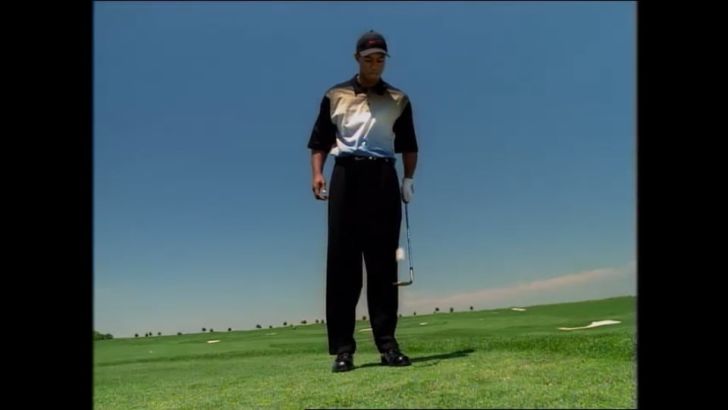
Welcome to the DISSECTED® Series. In this episode, Hal Curtis reveals the key decisions behind some of his best work for Nike and Coca-Cola.
Timestamps
00:50 How Choices On Set Led To Nike Hacky Sack
04:41 How Hacky Sack Ended Up Leading to Freestyle
05:45 Core Choices Behind Making Nike Freestyle
09:15 On The Shoot Of Nike Move
11:06 Editing Nike Move In Real Time
11:51 Music Choices In Nike Move
14:32 How Nike Move Was Sold
15:34 Key Choices Behind Nike “Before”
17:48 What Went Wrong On Nike “Morning After”
24:39 Working On Nike vs. Coca-Cola
27:01 Music Choices In Coke “It’s Mine”
28:55 How Coke “GTA” Got Sold
Dissected Work
Watch below the work Alberto and Ryan discuss in this episode.
Nike | Hacky Sack
Nike | Freestyle
Coca Cola | It’s Mine
Nike | Before
Nike | Move
Nike | Morning After
Coca Cola | Videogame
Why a Paywall
Imagine you could hire a film crew to interview the world’s best creatives, distill how they tackle their work, and bring you the most useful takeaways. Stuff like: how to get unstuck, sell more ideas, sharpen your craft, manage clients, level up your CD game, and avoid critical mistakes. Hiring that crew would be awesome. And expensive. Unless you get a bunch of creatives to chip in $12/month and fund the venture together. That’s what’s happening here. METHOD® is 100% funded by members, and every dollar goes back into making more interviews. Join the community, support the vision, and unlock full access.
Related Episodes
If you liked this one, you might also enjoy Hal’s full Method Breakdown:
Or you might also like Alberto & Ryan’s DISSECTED® episode, where they dive deeper into the main decisions behind other Nike hits:
Video Transcript
Below is an automatically generated transcript from the video. Minor mistakes can occasionally slip in.
How The Choices On Set Led To Nike Hacky Sack
HAL: We’d gotten a brief from Nike. This is like 1997, maybe, something like that. And Tiger was young. He had won the Masters, but all you saw of him was him competing, and he was always kind of scowling and pumping his fist. And it’s like, you know, actually, Tiger’s a really, you know, he’s got a great personality. And let’s do something that shows another side of Tiger, you know, let’s do something that shows his personality and not, you know, this hardcore competitive robot. That was the brief. And so we sold a spot called Driving Range where Tiger, there’s a bunch of golfers on the Driving Range, slicing the ball, topping the ball, and Tiger comes and he tees up a ball and he hits a beautiful drive, and the guy next to him notices that and then mimics his swing and then he hits a beautiful drive. And then the next two guys kind of...and then they all hit good drives. And pretty soon it’s like, you know, the chorus line of the Rockettes, everybody’s hitting great drives, Tiger leaves, and it all goes to hell again. And Nike loved it. We hired Lassa Hallstrom, a great Swedish director, my life as a dog, like water for chocolate, beautiful guy, to shoot it. And as we’re shooting it, in between takes, Tiger, he was using a driver, would do hacky sack. And, you know, like the extras, and, you know, they’re all just like, wow. And a guy named Kel Devlin, who was Bruce Devlin’s son, was the director of golf, and he was on the shoot. And he came up to Chuck and I and said, “Look at what he’s doing.” He goes, “That would be a great sales meeting video.” It’s like we could put him in next year’s apparel, and when we’re at the sales meeting to kick it off, we could show that, and the dealers will love it. You know, so we’re like, well, all right. And we asked Lassa if he could shoot it, and he said he had to do a call at lunch, and so he couldn’t shoot it at lunch. His B-camera operator was a guy named Doug Lyman, who was a young director. He had just done swingers, I think, and he wanted to get to know Lassa, and so he just was there to be near Lassa. He said, “I’ll shoot it.” And so lunch comes around, we put Tiger in the new apparel, put the sandbags down, and Doug Lyman goes, “Okay, Tiger, at 25 seconds, we’ll signal to you,” and then you, you know, hit it. And so he does it. Doug signals him at 25 seconds, and it messes him up. He flubs it, and he laughs. We try it again on the second take, and he does it again, and he messes up. And now he’s not as happy about that one. The third time, he messes up again at 25 seconds, and Doug Lyman said, “Tiger, I thought you said you could do this,” which pissed Tiger off. You could see the competitor name. He goes, “Okay, this time, you just do it, and when you’re comfortable, you hit it,” and then that was the take we used. He did it perfectly. And I remember Chuck and I looking at it, and we looked at each other like, “That ain’t no sales meeting video.” You know? And yeah. In fact, that spot kind of informed freestyle.
How Hacky Sack Ended Up Leading to Freestyle
HAL: Jimmy Smith, who was the writer on freestyle, he brought that idea and the idea of, you know, using the sounds of the game, and he had been working with that. And then I kind of brought the hacky sack experience, and I think it all kind of worked together, you know? Because what I learned from that, it’s like, you know, we went, and I was proud of driving range. Nobody remembers driving range. Everybody remembers hacky sack. I really didn’t have anything to do with hacky sack, other than, you know, we were smart enough to go, “Yeah, let’s shoot it,” but it’s all Tiger. And it’s like the lesson there was, and again, it informed freestyle. It’s like sometimes there’s nothing wrong with just getting out of the way and letting a world-class athlete do what they do, or just put a frame around it and go, “Have you ever just considered this? I mean, look at that,” you know? And that was interesting to me.
The Core Choices Behind The Making Of Nike Freestyle
HAL: Freestyle was interesting because we wanted to make the movement important and beautiful. There’s a softbox called a fissure light. I think that’s the correct term. It’s used to shoot cars, and it’s just this giant softbox, because obviously if you put lights everywhere, you see the reflection in the car, and it just drops this beautiful, you know, light across the subject. And Max Malkin was the DP. Paul Hunter was the director. And we all, Paul had done a music video with D’Angelo that was kind of a study of D’Angelo’s body on black that was very beautiful. It was one of the reasons Paul was very good with movement and music. And so we just wanted to shoot the athletes in the most beautiful, almost like it’s a stage, just to make it the most artful presentation, the most beautiful presentation of their movement, to get as far away from the street court as we could and just give it an aesthetic that was its own. So that was the thinking behind that. We all felt it was... Savion Glover was our choreographer, and Gregory Hines came by the set, which was cool. But we knew we needed the music to be thought out. We knew we wanted it to sound like the game sounds, you know, for the bouncing of the ball, the squeaking of the sneakers and all that, to be the instrumentation. But that was going to have to be done post. So we worked with Afrika Bambada, the godfathers of hip-hop, and they said, “Use Planet Rock. Shoot to Planet Rock, and what we compose will use that same classic hip-hop beat.” Boom, boom, boom, boom, boom, boom. And so we did. So we shot everything to Planet Rock. And I remember going into the... Adam Pertosky edited it, and we went in to see just a rough assembly of selects. And it was about two minutes... two or three minutes long to Planet Rock, and you could tell it worked perfectly. So African Bombata wrote a track. Jeff Elmasian took it, made it the sounds of the game, put it up against it, boom.